System Specs:
- Stellar Mass: _ Sol-masses
- Stellar Class: _
- Luminosity: _ Sol
- Planets: 3
- Moons: 0
- Asteroid Belts: 1
- Asteroids: 1
- Objects: 1

Asteroid
DATA:
M-type asteroid
Diameter: 267 km
Surface gravity: 0.01 G
ANALYSIS:
This asteroid is honeycombed with artificial caverns. A few fragments of Remnant technology remain, though it appears another party—perhaps the kett—removed the rest.
–
Planets Directory:
- Pas-55
- Ditivios
- Voeld
–
Pas-55:
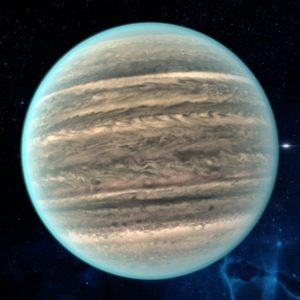
- Orbital Distance: 11.0 AU
- Orbital Period: 36.6 Earth-years
- Keplerian Ratio: 0.994
- Radius: 43,338 km
- Day Length: _ Earth-hours
- Atmospheric Pressure: 0.52 atm
- Surface Temp: _ °C
- Surface Gravity: _ g
- Mass: _ Earth-masses
Hydrogen and methane comprise the bulk of Pas-55’s atmosphere. Innumerable tiny satellites drift low in the gas giant’s orbit, too dispersed to form a proper “ring”.
Starship Wreckage
DATA:
- Ship ID: Yeonii-011
- Ship Name: Unknown
- Crew complement: 1
- Status: N/A
ANALYSIS:
This empty angaran escape pod appears to have been drifting over Pas-55 for nearly a decade. Markings suggest it came from a exploratory vessel; its data is now yours to carry forward.
–
Ditivios:
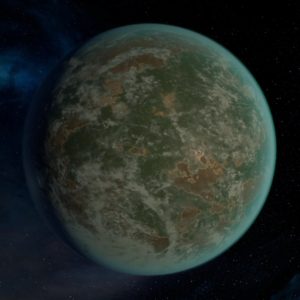
- Orbital Distance: 2.5 AU
- Orbital Period: 4.0 Earth-years
- Keplerian Ratio: 0.977
- Radius: 7,369 km
- Day Length: _ Earth-hours
- Atmospheric Pressure: 0.18 atm
- Surface Temp: -58 °C
- Surface Gravity: _ g
- Mass: _ Earth-masses
Ditivios is largely covered in oceans of nitrogen churned by powerful winds. The storms make detailed surface scans difficult.
Storm
DATA:
- Radius: 137 km
- Wind speed: 157 km/h
- Rotation: Counterclockwise
ANALYSIS:
This massive hurricane is carrying a sort of nitrogen-adapted plankton over the ocean. Ditivios appears to be home to simple lifeforms.
–
Voeld:
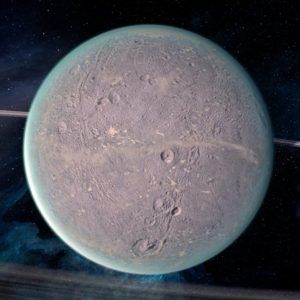
- Orbital Distance: 14.8 AU
- Orbital Period: 57.1 Earth-years
- Keplerian Ratio: 0.994
- Radius: 8,740 km
- Day Length: _ Earth-hours
- Atmospheric Pressure: 1.42 atm
- Surface Temp: -40 °C
- Surface Gravity: _ g
- Mass: _ Earth-masses
- Satellites: 1
- Colony: Angara (capital, of species: Angara)
Nonviable
Voeld is a world going through an ice age. Once packed with dozens of urban centers, most of Voeld’s angaran population now lives in scattered settlements. The remains of vast ancient cities are still entombed in ice.
ALERT: Voeld is a stronghold of the kett. Caution advised.
Viable
Voeld is a world going through an ice age. The now-active Remnant vault is raising global temperatures to more habitable levels, allowing the creation of the angaran-Initiative outpost Taerve Uni – meaning Forward together in angaran language. (Founded by Pathfinder Ryder; Mayor Priya Blake elected.)
ALERT: A kett presence is still reported on Voeld. Caution advised.
Initial Codex Entry
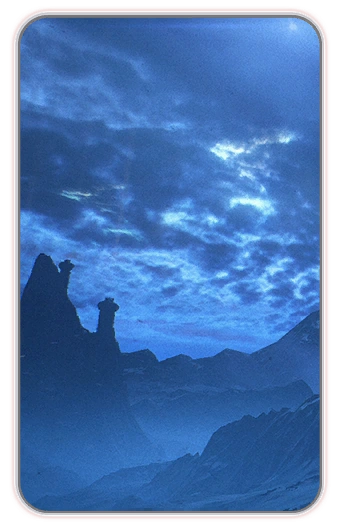
From the Milky Way, the Initiative identified Voeld as Habitat 6, a “golden world” projected to be a life-sustaining and temperate garden world. This is confirmed by angaran historians: Voeld was once a heavily populated and thriving angaran colony.
During the Scourge event, gravitational distortions affected Voeld’s orbit. Models from the Nexus tech labs show how this triggered a minor ice age. The angara were forced to withdraw to a few urban centers, with the rest of Voeld’s population scattered in smaller settlements.
Voeld is therefore both culturally and strategically important to the angara, and has drawn the attention of the kett. Reports suggest a significant military presence on both sides, as the Angaran Resistance fight to defend Voeld’s population and protect the ice-encased remains of their world.
Voeld Outpost Established
The Initiative’s new outpost, Taerve Uni, has been safely established. Led by new mayor Priya Blake, Taerve Uni is committed to open borders with the angara as Voeld becomes more habitable. The outpost is now a major supplier of water ice to other colonies and the Nexus.
Voeld Vault Activated
Analyzing Suvi‘s orbital readings, it appears that the Voeld vault, unable to gravitationally compensate for Voeld’s change in orbit, has triggered a controlled melt of frozen carbon dioxide in the permafrost. Projections show this will thicken the atmosphere, gradually raising Voeld’s temperature to ease the ice age. This reveals that Remnant vaults are capable of sophisticated analysis and response to planetary conditions.


–