These are the crop-growing rooms which allow this carrier to provide all the edible sustenance its crew and passengers (who eat) need.
–
Table of Contents:
- Introduction
- Clarification
- Nutrition
- Dimensions & Layout
- Notes
- Calculations
- Harvesting/Processing
- Training
- Images
- Videos
- Playlist
–
Introduction:
If it is grown on Inisfree’s main farmland, there is probably at least one of these grow rooms growing it here in this carrier. Thousands of crops there in Inisfree? Thousands of grow-rooms here in TNH; plenty of room –and great organization/compartmentalization.
- easily grown in standard shipping-container farms:
Artichokes
Arugula
Asparagus
Beans
Bok choy
Broccoli
Brussels sprouts
Cabbage/Brassicas
Carrots
Cauliflower
Chard
Cucumbers
Dragonfruit
Eggplants
Endives
Flowers
Grapes
Grasses/Groundcovers
Herbs; basil, chives, dill, mint, parsley, rosemary, etc.
Ivies
Kale
Leeks
Lettuce
Mushrooms
Onions (incl. shallots)
Peas
Peppers
Potatoes (incl. yams)
Radishes
Rice
Spinach
Squash (incl. zucchini)
Strawberries
Succulents (incl. Aloe Vera)
Tomatoes
Vines - usu. too big for container-farms, thus grown in the larger three sizes of TNH grow-rooms:
Apples
Avocadoes
Bamboo
Bananas
Berries (bushes)
Bushes/Shrubs (incl. those for tea)
Cacao
Cacti
Cherries
Cinnamon
Corn
Figs
Grains (barley, lentils, oats, etc.)
Grapefruits
Incense trees (sandalwood, etc.)
Jackfruit
Lemons
Limes
Maple (and Birch)
Nectarines
Nut trees
Olives
Oranges
Peaches
Pears
Pineapples
Plums
Pumpkins
Tangerines
Watermelon
Wheat
–
Clarification:
The TNH directory-webpage says TNH grows all the food it needs, but: the Mess Halls sub-page says TNH gets restocked. This is not a contradiction, though; restocking in TNH is largely internal, since there are grow-rooms even for full-size trees (for fruit, nuts (seeds), some berries (e.g. cherries), etc.). This carrier does grow all the food all aboard might ever need, but of course it does NOT mix those ingredients and package them the way some planet-side companies/specialists do, and THAT is where the WANT comes in; what TNH personnel WANT, not just NEED, DOES regularly get shipped to TNH from 34 Tauri worlds.
While TNH has rooms available for food processing/packaging, it encourages trade via letting some worlds help restock it, getting childhood/familiar favorites of sailors/personnel, boosting their morale with unexpected treats like that, and by showing interest in supporting (their) local economies.
–
Nutrition:
“Vertical aeroponics, particularly using fogponics or high-pressure aeroponic towers (like those from Tower Garden or Agrotonomy), consistently produces crops with nutrient densities equal to or higher than the best soil-grown organic produce.”
–
Dimensions & Layout:
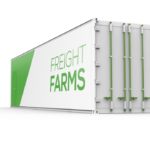
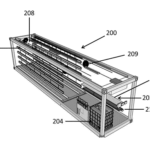
Most of these are each the size of a 20′ shipping container, just built into this carrier as internal rooms. They are technically modular, but are meant to stay inside, attached, producing.
Larger ones are much more spacious, some able to accommodate fully-grown nut-trees, even when those grow to be nearly 100′ tall (incl. their root ball/system). These larger grow-rooms include an entire deck/level just for soil/roots.
These rooms come in 4 sizes;
- container-farm nurseries with specific ideal conditions for individual crops
- 2-story home-size gardens with several types of plants somewhat close/connected
- 4-story rows for fruit trees, with more types of plants and even closer together
- 10-story rows for nut trees, with natural/maximum plant types and networks of compatible root systems
–
Notes:
No dej.:
Grow-rooms with fully-grown fruit- or nut-trees have hatches big enough to move each grown tree, root-ball and all, to the large hangars the same way I (Auz) used prong-attachment skid-steers during Forever Green.
That means some hallways are multiple/several stories tall.
–
Calculations:
64K human-size people aboard if ever TNH is at capacity:
- -2K contractors
- -4K Companions
- -9K spouses
- -10K mil.
- -12K children/youths
- -16K ICVs
.. - which leaves 11K; the max. # of psgrs. who can be added to the population
37K need 3meals/d; 111,000
× .75 lbs. = 83,250 lbs.
w/ 11K psgrs.: 48K ×3= 144,000
× .75 lbs. = 108,000 lbs.
0.00001-0.00005 of an acre can yield 1 lb. of vegan food, depending on the crop;
1 acre can yield 20,000-46,000 lbs.
108,000÷20,000= 5.4 acres
83,250÷46,000= 1.8 acres
1 acre = 43,560 ft^2; ~209’×209′
1.8 = 78,408 ft^2
5.4 = 235,224 ft^2
Every 20′ container farm can have 1,000 up to 2,500 ft^2 of surfaces for growing food.
235,224÷1,000= 236 20′ containers
78,408÷2,500= 32 20′ containers
and TNH has more than enough room for a few hundred of these containers,
but
that is PER DAY.
..
Each containers’ crops can be harvested ~every month, if in full, or staggered, such as 1/4 of their crops every week, or even daily or More often (i.e. each plant planted at different times, resulting in a nonstop harvest);
each container can provide food 4x/yr.
Growing in all TNH containers is offset so there is always a daily harvest, not just a monthly one.
If 32-236 20′ container-farms are enough to feed all potential human crew+passengers for a full day (3meals/human), and 4× a year,
then 365÷4= a need for 92× either 32 (low-end) or 236 (high-end);
2,944-21,712 20′ container-farms to feed that potential population year-round.
÷2 long-sides of the carrier = 1,472-10,856 per side.
All these grow-rooms are in 2 stacks, 1 per side of the carrier;
÷46 levels (subtracting 4 of 50 levels, due to armor, bombs, observatories, lasers, lifeboats/pods, sensors, shields, etc.) = 32-236 per level,
and TNH certainly has room for a couple/few hundred of these containers side by side, their ends facing the carrier’s long sides.
..
but
this does not include the multi-story grow-rooms, which have taller crops in them, such as fruit trees and nut trees,
making the carrier need fewer 20′ container-farms.
A 20-foot container farm typically produces 200 to 700 pounds of vegan produce (like leafy greens, herbs, and microgreens) per 4-week harvest cycle. Because of staggered planting and short growth cycles, a mature farm yields roughly 50 to 175 pounds of food per week, totaling 2 to 3 tons annually.
Annual food per 20′ container (i.e. monthly harvests):
2.5 tons = 5,511.56 lbs.
83,250 ÷ 5,511.56 = ~15 of these container-farms
108,000 ÷ 5,511.56 = ~20 of these container-farms
..
far fewer than the 21,712-containers high-end calc./estimate above;
TNH can grow all the food its maximum potential passengers-who-eat would need, even if it never accepted resupplies from planets.
–
Harvesting/Processing:
ICVs easily handle all the berries/fruit collecting/picking and more during each harvest time, even when there are day-to-day back-to-back harvests.
Lower-rank military personnel and some contractors also do some of this work, that they all be able to take over all of it after a couple decades of joint-operations in this vessel with the ICVs.
The harvested plant parts are then transported on hover-palettes to one or more factories in the carrier, where they are inspected, sorted, some packaged as raw ingredients, and others pre-processed to make them easier to use in meal-prep’ in the chow/mess halls.
–
Training:
There are always dozens of these the smallest of these grow-rooms (the container-farms) which are kept isolated and used for practice diagnosing and treating/curing every type of crop/plant ailment/blight every crop grown in TNH could ever “come down with”. It isn’t enough to just be able to grow one’s own food, whether in Space or anywhere else; one must also get used to dealing with those life-threatening (starvation-potential) “bumps in the road”. This also helps humans memorize the procedures/system which prevents the spread of such diseases/issues, as well as what detects such things before they can even really strain, let alone kill, any of these critical lifeforms.
–


–